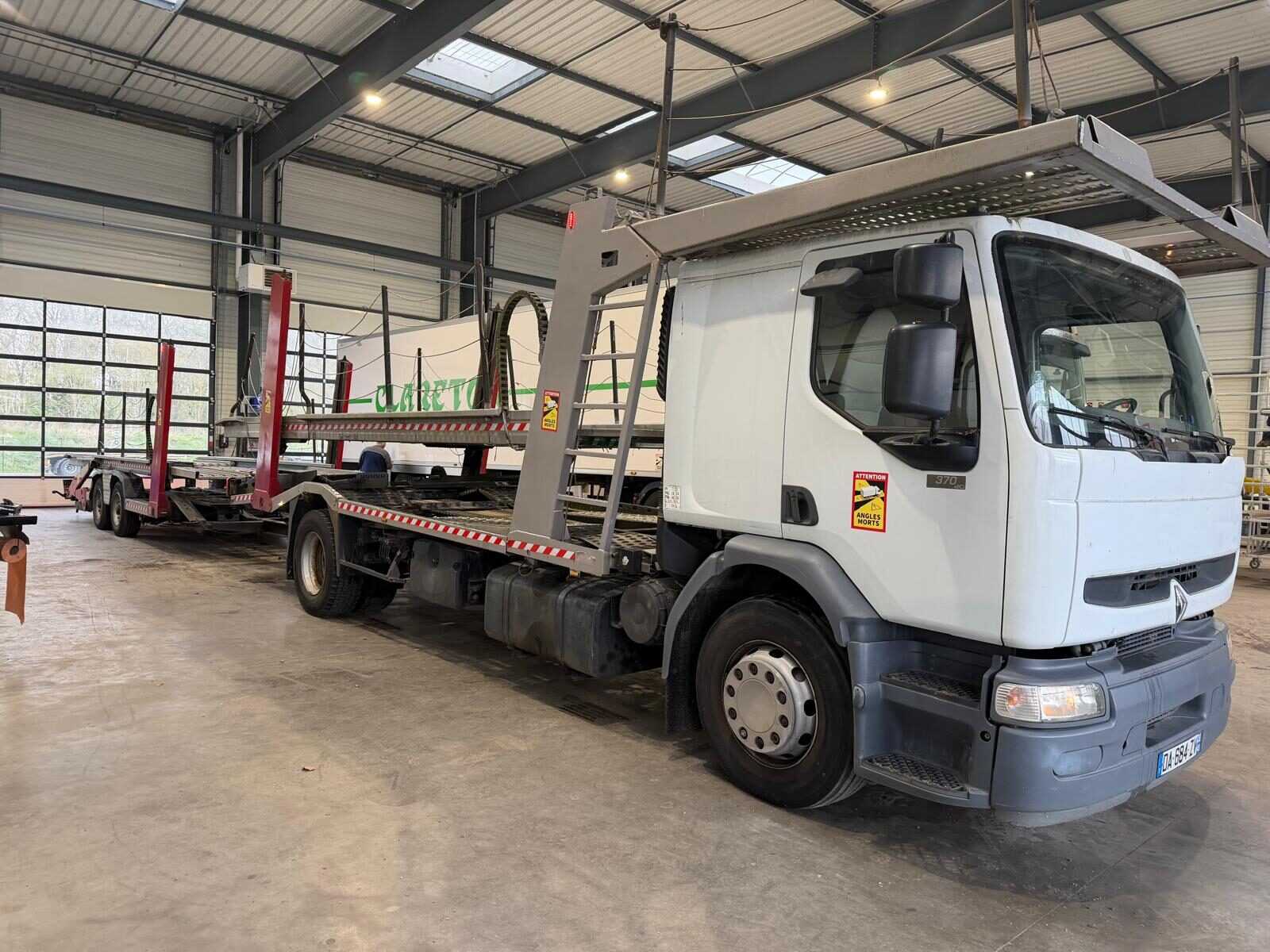
Car and motorcycle transport from Morocco to the Netherlands
Has your car been left in Morocco, broken down or after the holidays? We collect it in Nador, Al Hoceima, Tangier or Casablanca and deliver it to your door in the Netherlands, with no ferry to book and no 2,400 km drive.
Free quote in 2 minutes
Morocco → Netherlands
- Collection from your address in Morocco
- Delivery to your home in the Netherlands
- Moroccan exit formalities included
- All-risk insurance throughout the journey
- 10+years of experience
- 1,000+vehicles delivered
- 98%satisfied customers
- All-risk insurance
Did your car stay in Morocco after the summer, did it break down there, or are you coming back to live in the Netherlands with a vehicle bought there? ChronoConvoi collects it wherever it is, in Nador, Al Hoceima, Tetouan, Tangier, Casablanca or elsewhere in Morocco, and delivers it by truck to your address in the Netherlands. No flight to take to go and fetch it, no crossing to book and no 2,400 km to drive from Algeciras to Amsterdam.
In the Netherlands, this service is rare. Some Dutch transport companies that work with Morocco stop at a depot in Málaga: between Morocco and that depot, you still have to make the journey yourself, which doesn't help when the car no longer runs or you are already back home. The Dutch vehicle import companies we consulted do not mention Morocco. With us, the vehicle is taken care of door to door, and we handle the formalities for leaving Morocco.
On arrival, everything depends on the plate. A car registered in the Netherlands that comes back pays nothing at customs: its plate and its kentekenbewijs (registration certificate) prove its status as European Union goods. A vehicle coming from Morocco, on the other hand, has to be imported: customs duties, 21% VAT, an RDW keuring (inspection), BPM (the Dutch registration tax), then registration. The most expensive trap is the BPM on a car whose CO2 value is not recognised: the tax authorities then calculate it on 550 g/km for petrol, and the bill can exceed the price of the car. This page explains both cases in detail, with a worked example and the official sources at the bottom of the page.
For more than 10 years, our bilingual French-Arabic team has delivered more than 1,000 vehicles. We take care of the transport and the customs formalities. For the RDW keuring, the BPM and registration in the Netherlands, we guide you and check your case, but these procedures are done in your name and the taxes are payable by you. You receive a detailed quote within 24h, by email or on WhatsApp.
Price of car transport from Morocco to the Netherlands
Car
From 1 199 €
Motorcycle
From 499 €
From Morocco to the Netherlands: on quote, collection in Morocco included.
Indicative prices for a departure from Paris to Casablanca. Other routes: on quote.
Your exact price for Morocco → Netherlands
Pick-up city, delivery city, car or motorcycle: you receive a detailed quote, collection included.
Free, no obligation · Reply within 24h
Drive your car back from Morocco or have it transported?
Driving back from Morocco to the Netherlands starts with getting to the port: 379 km from Casablanca to Tanger Med, or the drive to Nador to catch the Almería ferry. Then comes the crossing, followed by about 2,420 km from Algeciras to Amsterdam, i.e. nearly 26 hours of pure driving; from Almería, about 2,300 km remain. Here is the one-way trip in a petrol car from Tanger Med, to compare with your quote. If the car has broken down, or if you have already flown home, this option doesn't exist.
| Cost item | You drive yourself | With ChronoConvoi |
|---|---|---|
| Distance | 379 km from Casablanca to Tanger Med, then about 2,420 km from Algeciras to Amsterdam | Collection in Morocco, delivery to your address |
| Driving time | About 26 hours of pure driving in Europe, plus the journey in Morocco | None |
| Fuel | About €310 of petrol to Amsterdam | Included |
| Tolls | About €98 in France, plus the Spanish toll motorways (not costed) | Included |
| Ferry crossing | €152 to €205 off-peak, up to €550 at peak times (Tanger Med → Algeciras, car and driver); €180 to €220 via Nador → Almería | Included |
| Nights on the road | 2 nights in a hotel, plus meals (not costed) | None |
| Time off and constraints | About 3 days off work; impossible if the car no longer runs or you are already back home | No travelling on your side |
| Estimated total (one way) | About €560 to €960, excluding nights, meals, the drive in Morocco and Spanish tolls | On quote, all-inclusive |
ChronoConvoi estimate of 6 November 2026 for a one-way trip Tanger Med → Amsterdam in a petrol car, with a single driver. Distances and pure driving times: OSRM (OpenStreetMap) calculation made for the Europe → Morocco direction, assuming the return is identical. Fuel: prices as of 2 November 2026 and an assumed consumption of 6.5 L/100 km. Tolls: French motorways, May 2026 rates; Spanish tolls are not costed. Ferry: prices taken on 6 November 2026 from the aferry comparison site; the lowest average is in December (€154 on Tanger Med → Algeciras), the highest in August. Via Nador and Almería, the total is about €580 to €940. By motorcycle, allow about €380 (€240 of fuel at 5 L/100 km, €59 of tolls in France, ferry from €78). Not costed: nights, meals, the drive in Morocco to the port, days off and, if you are already back home, the flight to fetch the vehicle.
Skip the drive: your vehicle travels by truck
No ferry, no hotel nights, no extra miles on your vehicle.
Free, no obligation · Reply within 24h
How to bring your car back from Morocco to the Netherlands
- 1
Describe your situation
Tell us where the vehicle is in Morocco, whether it runs, its plate (Dutch or Moroccan) and your address in the Netherlands. You receive the price and timescale within 24h, in French or Arabic, by email or on WhatsApp.
- 2
Temporary admission and papers checked
We go through the end date of your temporary admission with you, along with the registration certificate, the temporary admission card, the power of attorney and the proof of residence. If a deadline has passed or a document is missing, you know before collection: we check your case.
- 3
Collection in Morocco
We come to collect the vehicle at the agreed address, at your relatives' or in a garage, in Nador, Al Hoceima, Tangier, Casablanca or elsewhere. If you are already in the Netherlands, we agree together on who will hand us the keys and papers. A condition report is signed and photos are taken before loading.
- 4
Leaving Morocco and the crossing
We take care of the customs formalities on leaving Morocco and of the crossing to Spain. On the vehicle carrier, your vehicle is not driven and stays covered by all-risk insurance until delivery.
- 5
On the road to the Netherlands
The truck travels up through Spain and France to the Netherlands, and you follow the progress of the transport. For a vehicle to be imported, customs transit (T1) means the duties are only paid at the customs office of arrival.
- 6
Delivery and next steps
The vehicle is delivered to your address in the Netherlands, with new photos and a delivery condition report. If it has to be imported, we guide you through the RDW keuring, the BPM and registration, and we check your case before each step.
Our convoys in pictures

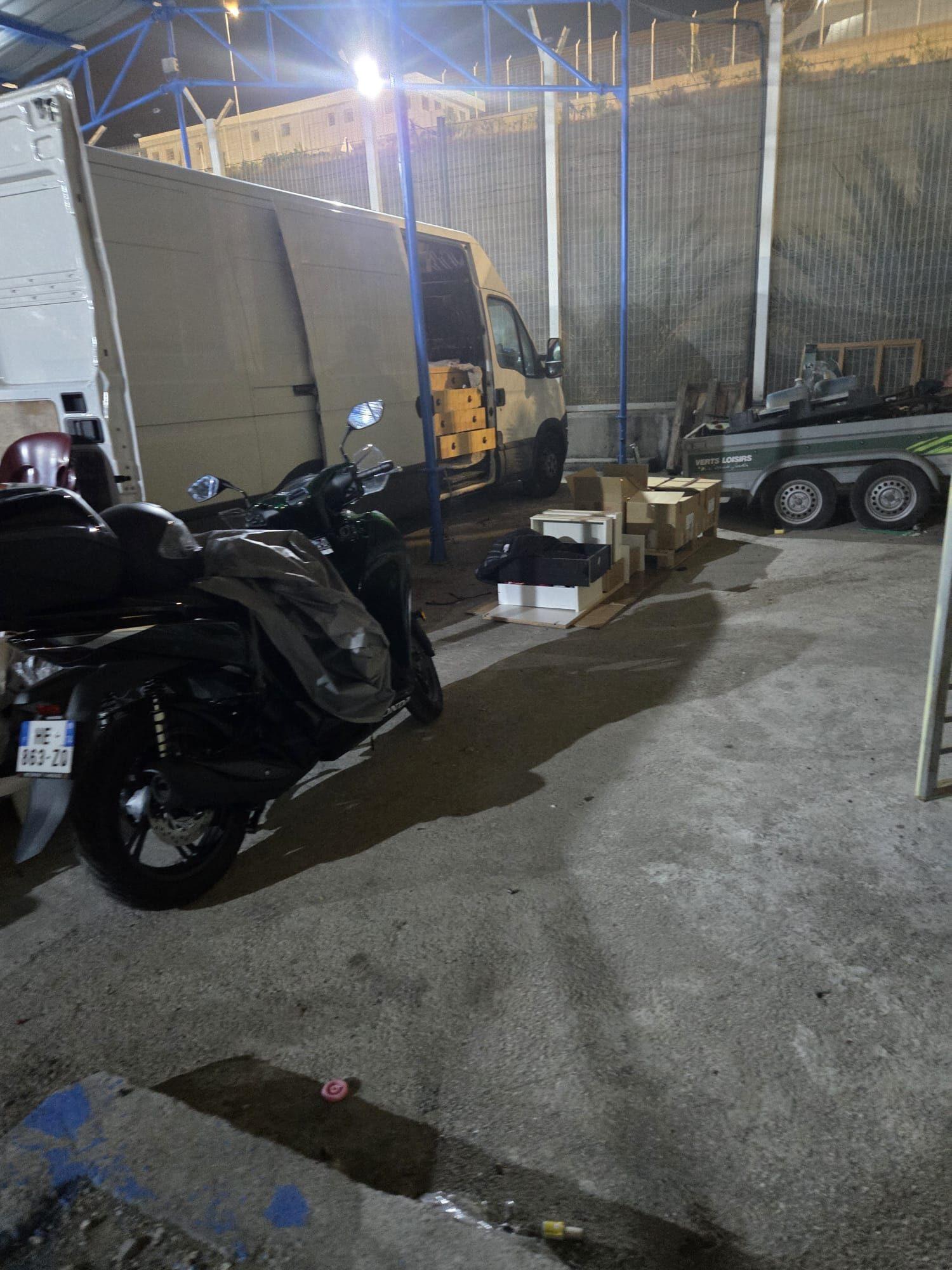

Collection towns in Morocco, delivery in the Netherlands
- Nador
- Al Hoceima
- Tetouan
- Tangier
- Oujda
- Fez
- Meknes
- Rabat
- Casablanca
- Marrakech
- Agadir
Many Moroccans in the Netherlands have their roots in the Rif, around Nador and Al Hoceima, and take the Nador → Almería ferry. Whether the vehicle is at your relatives', outside the family home or in a garage, we collect it on the spot, in the Rif as well as in Tetouan, Tangier, Rabat or Casablanca. We then deliver it to your address in the Netherlands, in Amsterdam, Rotterdam, The Hague, Utrecht, Eindhoven or a smaller town. For a car to be imported, tell us whether it first has to be presented to the RDW: we take this into account in the quote.
And anywhere else in Morocco, on quote, with delivery anywhere in the Netherlands.
Your city is not on the list?
Add it to your request: we confirm the collection in the quote.
Free, no obligation · Reply within 24h
Arriving in the Netherlands: customs, RDW inspection, BPM tax and registration
In the Netherlands, the question that decides everything is the plate. If your car has a Dutch kenteken, it is coming home: no duties, no VAT, and usually nothing to do at the RDW. If the vehicle comes from Morocco, with a Moroccan plate or because it was bought there, it has to be imported: customs, VAT, keuring, BPM and kenteken, in that order. Tell us when you request your quote: we guide you through each step and check your case, but registration is done in your name and the taxes are payable by you.
Your European vehicle comes home
- Customs: nothing to pay. The plate and the kentekenbewijs prove that the car has the status of Union goods (Article 208 of Implementing Regulation (EU) 2015/2447). The kentekenbewijs therefore travels with the vehicle: hand it to us at collection.
- RDW: nothing to do if the kenteken stayed active during the stay, with the insurance, APK and wegenbelasting (MRB) carrying on as normal.
- Car switched to “Export” status: as it is already registered in the Netherlands, it can go back through an ordinary keuringsstation, without going to Lelystad. We have not found an official answer on whether a second BPM is due in this case: we check your case before departure.
- On the Moroccan side, the exit must close your temporary admission. Until that is done, you remain liable to Moroccan customs and cannot obtain a new temporary admission for another stay.
Importing a vehicle from Morocco
- Customs declaration: it is made on entry into the Netherlands, for example at the port of Rotterdam, online (DMS system), by yourself or by a representative. By road, the vehicle enters the EU in Spain, and T1 transit suspends the duties until the office of destination.
- Duties and VAT: usually 10% duty for a car, less if a preferential Moroccan origin is proven, then 21% VAT on the value plus the duties. For a motorcycle, the duty rate is different: we check it for your model.
- RDW keuring, after customs: without European type approval, it is an individual approval, most often in Lelystad, with an appointment within 2 weeks. Rates: €1,128 for a car (€1,986 if built from 2024 onwards), €871 for a motorcycle, plus €50 for the entry in the register and €13.10 for the tenaamstelling (registration in your name). With a COC, an ordinary keuringsstation is enough, as for a car built before 1998 or a motorcycle built before 2006.
- BPM: calculated on CO2 emissions, then reduced according to age (koerslijst, taxatierapport or flat-rate table). Without a recognised CO2 value, the tax authorities use 550 g/km for petrol and 395 g/km for diesel for a car first registered on or after 1 July 2020. After 17 years and 10 months, there is no more BPM.
- Kenteken: the kentekenbewijs arrives within 5 working days. You then need the APK and WA (third-party liability) insurance, and the wegenbelasting (MRB) notice is sent to you automatically.
- Permanent return (verhuisboedel): no duties, VAT or BPM if you lived outside the EU for 12 consecutive months just before returning and have owned and used the vehicle for at least 6 months. The customs declaration goes through a removal or transport company, a paper BPM return still has to be filed, and the RDW asks you to come in person, once registered in the BRP (the municipal population register).
Getting a vehicle out of Morocco: temporary admission, penalties and customs
A Dutch car left in Morocco is under temporary admission: 180 days per calendar year, continuously or in several visits, according to the Moroccan customs circular of 28 May 2025. To take it out of the country, this text provides for re-export by the holder themselves or by a third party. A third party who also lives abroad does not need authorisation if they present the registration certificate, the temporary admission card, proof of residence and a power of attorney. A third party who lives in Morocco must obtain authorisation from the customs office closest to their home, after paying the fine if the deadline has passed. Transport by truck is not described in the circular: we read it as re-export by a third party, but customs has not confirmed this, so we check your case before collection. Until the vehicle leaves, the holder remains liable. The admission can be transferred to another non-resident while it is valid, without extending the deadline, but not for an admission obtained under a power of attorney, except to the owner.
If the deadline has passed, the fine is 1,000 DH up to 30 days, 2,500 DH from 31 to 60 days, 5,000 DH from 61 to 180 days and 10,000 DH beyond. The vehicle can only leave once the fine has been paid, and it must no longer be driven, except with authorisation to take it to the exit office. If you had to go home urgently, the car can stay in a garage, without a seal, as long as nobody drives it; once the deadline has passed, you undertake to regularise the situation when you come back. If the holder dies, the heirs or their representative bring the vehicle back. You can check your situation online, and the circular gives the address atvoyageurs@douane.gov.ma; the old D16 ter form no longer exists, and the temporary admission card is now issued by the BADR system.
After an accident or a serious breakdown, the circular allows the vehicle to be cleared through customs as scrap, without a fine if the holder comes forward to customs of their own accord with an approved expert's report, photos and a police report or accident report. An approved insurer or assistance company can handle the procedure, and an assistance company can bring in spare parts under temporary admission. For a vehicle registered in Morocco, the procedure for leaving the country for good (export declaration, release of any lien, deregistration) is not described in any official source we have found: we check your case with an approved customs broker before setting a date.
Customs and paperwork: we handle everything
Every case is different. Describe yours and we tell you exactly what is needed.
Free, no obligation · Reply within 24h
Motorcycle transport from Morocco to the Netherlands
A Dutch motorcycle left in Morocco follows the same rules as a car: 180 days of temporary admission per calendar year, re-export by you or by a third party with a power of attorney, and a fine for overstaying. By road, allow about €78 for the crossing from Tanger Med to Algeciras (a price found without saying whether the rider is included) or €125 to €135 from Nador to Almería, then more than 2,300 km in the saddle to the Netherlands. With us, it travels secured on the truck, covered by all-risk insurance, from the collection address to your door; as a benchmark, a motorcycle Paris → Casablanca starts at €499, and from Morocco it is on quote. If you want to send it back to Morocco the following summer, the round trip comes at a reduced price. To import a motorcycle from Morocco, allow 21% VAT, duties whose rate we check for your model, the RDW keuring (€871 in Lelystad, or an ordinary keuringsstation for a motorcycle built before 2006 or with a COC) and a BPM of 9.6% of the Dutch net list price up to €2,133, or 19.4% minus €210 above that, before the age-related reduction.
Importing a car bought in Morocco into the Netherlands: what to check first
Thinking of buying a car in Morocco to keep in the Netherlands? Make three checks before you pay. First, the CO2 value: without a COC or a recognised value, the BPM is calculated on 550 g/km for petrol, and importing it can cost more than the car itself. Next, the age: the BPM goes down over the years and disappears after 17 years and 10 months, and a car built before 1998 goes through an ordinary keuringsstation. Finally, the origin: a car assembled in Morocco could enter with lower duties, or none at all, if its preferential origin is proven, but we do not yet know whether this proof is possible for a used car. A classic vehicle 30 years old or more, kept in original condition, may fall under a separate scheme, and the permanent exit of a vehicle registered in Morocco still needs to be checked: we go through these points with you before you buy. Our purchase and delivery service works the other way round: we can buy a vehicle in Europe and deliver it to Morocco, for a relative for example.
Discover our purchase & delivery serviceWhen should you have your vehicle brought back from Morocco?
The end of August is the busiest time for the return: in 2026, Tanger Med advised avoiding 25 to 29 August, when waiting times get longer, and it was the second year of the “firm ticket”, with a fixed crossing date and time. During the first month of Operation Paso del Estrecho 2026, 160,000 vehicles boarded in Spanish ports, including 100,047 in Algeciras. August is also the most expensive month for ferries, whereas prices are at their lowest from December to March. For a car left in Morocco after the holidays, the real calendar is that of the temporary admission: count your 180 days over the calendar year, and remember that an admission expiring on or after 1 December can be extended by 6 months, at the request of the holder or a person they have formally appointed. Give us the end date shown on your temporary admission card: we take it into account when setting the collection date, so that you avoid the fine.
Frequently asked questions: cars and motorcycles from Morocco to the Netherlands
Didn't find your answer?
Describe your situation and we will reply.
Free, no obligation · Reply within 24h
Official sources
- Moroccan customs: circular 6659/311 of 28 May 2025 (temporary admission, re-export, penalties, in French)
- Dutch Customs: cars and motorcycles from a non-EU country (in Dutch)
- KvK: importing cars and car parts (duties and VAT, in Dutch)
- RDW: having a vehicle from outside the EU approved (in Dutch)
- Belastingdienst: calculating the BPM on a car (in Dutch)
- Belastingdienst: BPM depreciation (koerslijst, taxatierapport, flat-rate table, in Dutch)
- Belastingdienst: BPM exemptions, including moving house (in Dutch)
- RDW: moving to the Netherlands with your vehicle (in Dutch)
Information checked in November 2026. Rules can change: we confirm your situation when we draw up your quote.
Our other departures

Ready to bring your vehicle back from Morocco to the Netherlands?
Free, detailed quote within 24h.
Free quote in 2 minutes
Morocco → Netherlands